
Struggling with acne scars, uneven skin tone, fine lines or dull-looking skin? Choosing between a chemical peel vs microneedling can feel confusing when both treatments promise smoother, healthier-looking skin. The wrong choice may leave you with unnecessary downtime or results that do not match your goals. The good news is that understanding how each treatment works makes it much easier to choose the right option for your skin type, concerns and lifestyle in Brampton’s changing climate.
Quick Answer: Chemical Peel vs Microneedling
A chemical peel works best for surface concerns like dullness, clogged pores, sun damage, mild pigmentation, and rough texture. Microneedling works deeper by creating controlled micro-channels that support collagen renewal, making it useful for acne scars, fine lines, texture, and firmness.
| Skin Concern | Better Option in Many Cases | Why |
|---|---|---|
| Dull skin | Chemical peel | Removes damaged surface cells |
| Acne scars | Microneedling | Supports collagen remodelling |
| Fine lines | Both | Peel smooths surface; microneedling supports collagen |
| Hyperpigmentation | Depends | Peel may brighten; microneedling needs careful settings |
| Large pores | Both | Improves texture and skin appearance |
| Deeper wrinkles | Microneedling or RF microneedling | Works below the surface |
| Fast glow before an event | Light chemical peel or facial | Usually less recovery than deeper treatments |
For a personal plan, Alpha Med Spa may assess your skin, tone, sensitivity, lifestyle, and recovery time before recommending treatment. You can also explore microneedling in Brampton or read Alpha Med Spa’s chemical peel recovery guide.
What Is a Chemical Peel?
A chemical peel is a professional skin resurfacing treatment that uses carefully selected acids to exfoliate damaged outer layers of skin. As the treated skin sheds, newer skin may appear smoother, brighter and more even in tone. Depending on the strength of the peel and your skin concerns, multiple sessions may be recommended for best results.
What Is in a Chemical Peel?
Common peel ingredients may include:
- Glycolic acid for texture and brightness
- Lactic acid for gentle exfoliation
- Salicylic acid for oily or acne-prone skin
- Mandelic acid for sensitive or pigmentation-prone skin
- TCA (Trichloroacetic Acid) for deeper resurfacing when appropriate
The right formula matters more than the strongest formula. A professional should match the peel to your skin type, concern and downtime.
Chemical Peel Benefits
Key chemical peel benefits may include:
- Brighter-looking skin
- Smoother texture
- Reduced clogged pores
- Improved uneven tone
- Softened fine lines
- Fresher skin appearance
The American Academy of Dermatology notes that dermatologists use chemical peels for signs of aging and some discolouration concerns.
What Is Microneedling?
Microneedling is a minimally invasive skin treatment that uses fine needles to create controlled micro-injuries in the skin. This process helps support natural collagen renewal and may improve skin texture, acne scars, fine lines, enlarged pores and overall skin appearance over time.
Benefits of Microneedling
The main benefits of microneedling come from collagen support. It may help improve:
- Acne scars
- Fine lines
- Skin texture
- Mild laxity
- Enlarged-looking pores
- Uneven skin surface
So, does microneedling work? For the right candidate, yes, but results take time. Skin needs weeks to build collagen and most people need a series.
Chemical Peel vs Microneedling: Main Differences
| Factor | Chemical Peel | Microneedling |
|---|---|---|
| Main action | Exfoliates surface layers | Stimulates deeper skin repair |
| Best for | Glow, pores, pigment, dullness | Scars, texture, collagen, fine lines |
| Downtime | Mild flaking to visible peeling | Redness, sensitivity, mild swelling |
| Results speed | Often visible after peeling | Builds over weeks |
| Comfort | Tingling or warmth | Prickling; numbing often used |
| Skin tone caution | Medium/deep peels need care | Depth and settings must be chosen carefully |
Recovery after a superficial chemical peel usually takes about one to seven days, while medium or deeper peels may require longer healing and more aftercare.
Chemical Peel vs Microneedling for Acne Scars
For microneedling vs chemical peel for acne scars, microneedling often has an advantage for indented scars because it works below the surface. A peel may help post-acne marks, roughness and discoloration, but it cannot “fill in” deeper atrophic scars the same way collagen induction may.
A clinical study comparing microneedling with glycolic acid peels for acne scarring in Fitzpatrick skin types IV to VI found better acne scar outcomes with microneedling in that study group.
Chemical Peel vs Microneedling for Wrinkles
For chemical peel vs microneedling for wrinkles, the best choice depends on wrinkle depth.
A chemical peel can help fine surface lines and rough texture. Microneedling may be better when the goal is collagen support and gradual firmness. For deeper lines, RF (Radio Frequency) microneedling or radiofrequency microneedling may be discussed, but it needs skilled hands and proper screening.
The FDA has warned that RF (Radio Frequency) microneedling can cause serious complications when used improperly, including burns, scarring, fat loss, disfigurement and nerve damage.
Microneedling vs Chemical Peel for Hyperpigmentation
For Brampton’s diverse skin tones, pigmentation safety matters. Both treatments can help uneven tone, but both can also worsen pigmentation if performed too aggressively.
A chemical peel may be useful for sun spots, dullness and post-acne marks. Microneedling may help texture and scars, but settings must be conservative for pigmentation-prone skin.
This is where Alpha Med Spa’s personalized approach matters. A provider should check:
- Your Fitzpatrick skin type
- History of melasma
- Tendency to dark marks after acne
- Recent tanning or sun exposure
- Current skincare actives
- Past peel or laser reactions
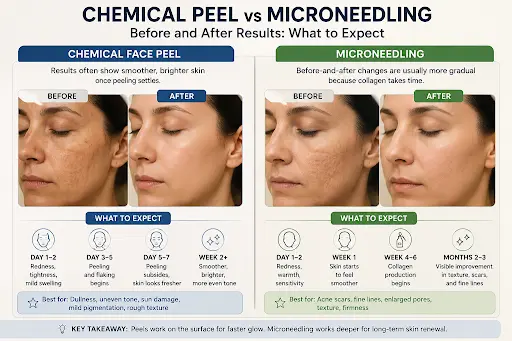
Chemical Peel vs Microneedling Before and After: What to Expect
Chemical face peel before and after results often show smoother, brighter skin once peeling settles. With microneedling, before-and-after changes are usually more gradual because collagen takes time. Results vary based on skin type, treatment depth, consistency, lifestyle and aftercare.
| Timeline | Chemical Peel | Microneedling |
|---|---|---|
| First 24–48 hours | Tightness, redness, dryness | Redness, warmth, sensitivity |
| Days 3–7 | Flaking or peeling | Redness fades; mild dryness possible |
| 4–6 weeks | Brighter tone, smoother texture | Early collagen changes |
| 3 months | Maintenance may be needed | More visible texture improvement |
Health Canada recommends broad-spectrum sunscreen with SPF 30 or higher, applied before sun exposure and reapplied at least every two hours during exposure. This is especially important after resurfacing treatments.
Should I Do a Chemical Peel or Microneedling First?
The answer depends on your skin.
Choose a peel first when your main concerns are congestion, dullness, rough surface texture or mild pigmentation. Choose microneedling first when your main concerns are acne scars, deeper texture or collagen loss.
Some treatment plans combine both, but not too close together. Skin needs time to heal between procedures. A study on atrophic post-acne scars found that combining microneedling and chemical peeling produced strong measured effects, but combination care should be planned professionally.
Chemical Peel vs Laser vs Microneedling
Chemical peel vs laser vs microneedling is really a question of depth, risk, downtime and goal.
- Chemical peels are useful for surface renewal.
- Microneedling supports collagen and texture repair.
- Lasers can be stronger for pigment, vessels, resurfacing or tightening, depending on the device.
If you want a gentler option, a HydraFacial in Brampton may refresh dull or congested skin with little downtime. For exfoliation-focused care, microdermabrasion in Brampton may also be considered.
Who Should Avoid These Treatments?
You may need to delay or avoid treatment if you have:
- Active infection or cold sores
- Open wounds
- Severe sunburn
- Uncontrolled active acne in the treatment area
- Recent aggressive exfoliation
- A history of poor wound healing or keloids
- Recent isotretinoin use, unless cleared by a medical provider
- Pregnancy or breastfeeding, depending on the treatment and products used
Always share medications, skin conditions, allergies and past reactions before treatment.
Aftercare Tips for Brampton and Ontario Weather
Ontario weather can be tough on healing skin. Winter dryness, indoor heating, wind, summer UV and pollution can all affect recovery.
After treatment:
- Use a gentle cleanser
- Apply a bland moisturizer
- Avoid scrubs, acids, and retinoids until cleared
- Do not pick peeling skin
- Skip hot yoga, saunas and heavy sweating at first
- Wear SPF daily
- Follow your provider’s post-care plan
Which Is Better: Microneedling or Chemical Peel?
Neither treatment is “better” for everyone.
Choose a chemical peel if you want brighter skin, smoother surface texture, improved congestion or help with mild discolouration.
Choose microneedling if you want collagen support, acne scar improvement, smoother texture or help with fine lines over time.
Choose a consultation if you have melasma, darker skin tone, sensitive skin, active acne or a history of pigmentation after treatments.
Why Choose Alpha Med Spa in Brampton, Ontario?
At Alpha Med Spa, clients in Brampton receive personalized skin treatments based on their skin type, concerns and goals. The clinic offers advanced services including chemical peels, microneedling, Secret RF microneedling, HydraFacial and medical-grade facials to help improve skin texture, tone, acne scars, and signs of aging.
Whether you choose a chemical peel or microneedling, the right treatment starts with a professional skin assessment and a customized approach tailored to your skin needs.
Final Thoughts on Chemical Peel vs Microneedling
Both treatments can improve the appearance and feel of your skin when performed correctly and matched to the right concern. A chemical peel may be ideal for dullness, uneven tone and surface texture, while microneedling is often preferred for acne scars, collagen support and long-term skin renewal.
The best option depends on factors like:
- Your skin type and sensitivity
- Acne scars or pigmentation depth
- Wrinkle severity
- Downtime preferences
- Previous treatments
- Seasonal skin changes in Ontario weather
If you are unsure which treatment fits your goals, booking a professional consultation can help you avoid unnecessary downtime and choose a treatment plan tailored to your skin.
Ready to improve your skin with a customized treatment approach? Contact Alpha Med Spa in Brampton, Ontario to schedule a personalized skin consultation and explore the best option for healthier, smoother-looking skin.
FAQs About Chemical Peel vs Microneedling
1. Why does my skin look older after microneedling?
It is normal for skin to look temporarily dry, tight or tired after microneedling. Mild redness and dehydration are part of the early healing process while collagen renewal begins underneath the skin. Most clients at Alpha Med Spa notice smoother and healthier-looking skin as healing progresses over the following weeks.
2. Do dermatologists recommend chemical peels?
Yes. Professional chemical peels are commonly used to improve concerns such as uneven skin tone, acne, sun damage and early signs of aging. The right peel strength and ingredients should always be selected based on your skin type and sensitivity.
3. Which treatment is better before an event or special occasion?
A light chemical peel or gentle facial may be a better option before an event because recovery is usually shorter. Microneedling may cause temporary redness for several days, so timing matters. It is best to avoid trying a new treatment too close to an important occasion.
4. How many sessions of microneedling or chemical peels do most people need?
Many people notice improvement after one session, but a series of treatments often gives better long-term results. Acne scars, wrinkles and pigmentation usually require multiple sessions spaced several weeks apart for gradual skin improvement.
5. What is the downtime after a chemical peel or microneedling treatment?
Light chemical peels may involve mild peeling or dryness for a few days, while microneedling may cause redness and sensitivity for up to several days. Recovery time depends on the treatment depth, skin sensitivity and aftercare routine.
6. Can chemical peels and microneedling be combined?
Yes, in some cases they can be combined as part of a professional skin rejuvenation plan. Chemical peels help exfoliate the skin surface, while microneedling focuses on collagen renewal below the surface. A qualified provider should decide the safest timing between treatments.
7. Are chemical peels safe for darker skin tones?
Yes, but the peel type and strength must be chosen carefully. Professional assessment is important to reduce the risk of irritation or post-inflammatory hyperpigmentation.