
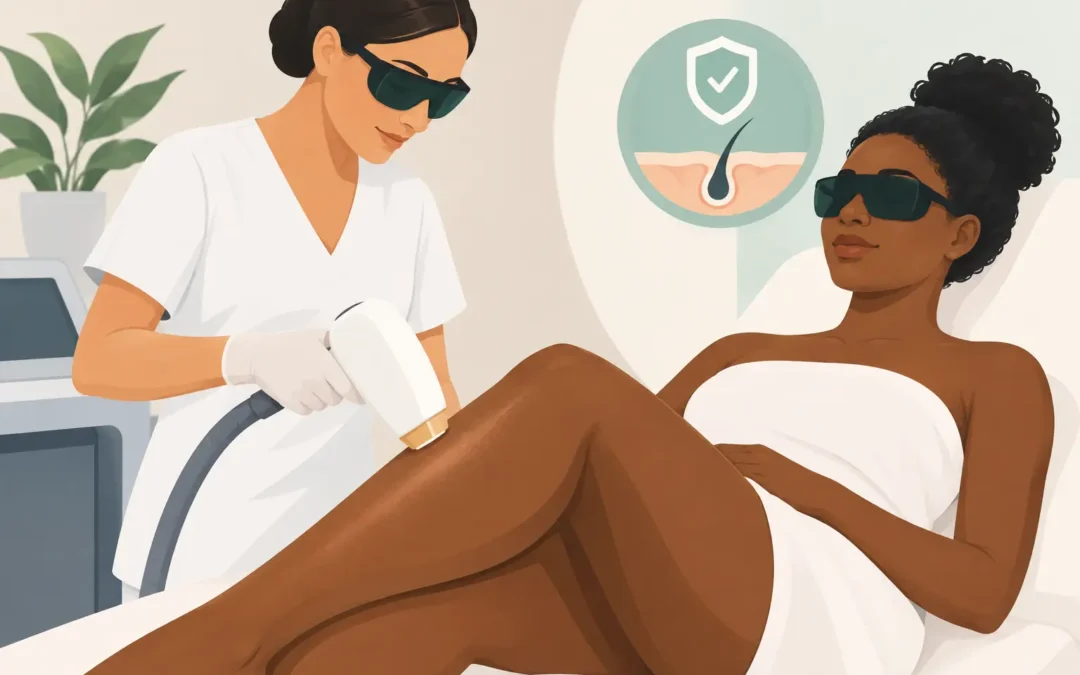
A missed shaving spot before a meeting, razor bumps after a close shave, or the constant work of waxing can make unwanted hair feel like more than a minor inconvenience. Laser hair removal for dark skin can be a highly effective option, but the treatment must be planned with care. Your skin tone, hair texture, treatment area, and the technology being used all matter when safety and visible results are the goal.
For many clients, the concern is not whether laser hair removal works. It is whether it can be performed without burns, dark marks, or uneven pigmentation. With the right laser system, experienced providers, and a customized approach, darker skin tones can be treated confidently and effectively.
Why Darker Skin Needs a More Precise Approach
Laser hair removal works by directing light energy toward melanin, the pigment that gives hair its colour. The heat generated in the hair follicle helps interrupt future growth. The challenge is that melanin is also present in the skin. On deeper skin tones, an inappropriate laser or overly aggressive setting can heat the surrounding skin along with the hair follicle.
That does not mean darker skin is unsuitable for treatment. It means the treatment cannot be one-size-fits-all. A provider must distinguish between pigment in the hair and pigment in the skin, then select settings that target the follicle while protecting the skin’s surface.
This is why a consultation is more than a formality. It is the point where your practitioner assesses your skin tone, the density and coarseness of your hair, your history of pigmentation, and any recent sun exposure or skin sensitivity. A thoughtful plan reduces avoidable risk and gives you a more realistic picture of what your treatment series can achieve.
The Best Laser Options for Dark Skin
For laser hair removal for dark skin, long-pulsed Nd:YAG technology is often considered the preferred option. Its longer wavelength reaches the hair follicle while bypassing more of the melanin near the skin’s surface. This makes it a strong choice for many Fitzpatrick skin types IV through VI, which include medium-brown to deep skin tones.
Some diode lasers can also be appropriate, depending on the specific device, its cooling system, and the experience of the provider using it. The key is not simply the name of the technology. It is whether the device offers appropriate wavelengths, adjustable pulse settings, and skin-protective cooling, and whether the treatment team knows how to use them for your complexion.
Intense pulsed light, often called IPL, is not the same as laser hair removal. Because it uses a broad spectrum of light rather than a single focused wavelength, it may carry a higher risk of unwanted pigmentation changes on darker skin when used without careful screening. The safest choice is to ask what technology will be used and why it is suitable for your individual skin and hair profile.
What a Safe Treatment Plan Looks Like
Premium care begins before the first pulse of laser energy. A quality provider will review medications, recent tanning, active skin conditions, prior reactions to hair removal, and any tendency toward post-inflammatory hyperpigmentation. Conditions such as eczema, folliculitis, or an active rash in the treatment area may mean postponing treatment until the skin has settled.
A patch test is especially valuable for clients with dark skin. It allows the provider to observe how a small area responds before treating a larger zone. There may be temporary warmth or mild redness, but the skin should not blister, crust, or develop persistent irritation. If needed, settings can be adjusted before your full session.
During treatment, cooling is not simply a comfort feature. It helps protect the surface of the skin while the laser targets the follicle below. You should also receive clear aftercare instructions and know who to contact if you have an unexpected reaction. The Alpha Difference is found in these details: personalized settings, attentive monitoring, and care that respects the health of your skin at every stage.
Preparing for Your Appointment
The weeks around treatment influence both comfort and results. Avoid tanning, tanning beds, and self-tanner before your appointment, as a change in skin colour can affect how your practitioner selects laser settings. Use broad-spectrum sunscreen on exposed areas and let your provider know about any recent sun exposure, even if it seems minor.
Shave the area as directed, usually the day before or on the day of your session. Shaving keeps the hair follicle in place while removing hair above the skin, allowing the laser energy to focus where it is needed. Avoid waxing, threading, tweezing, or epilating for several weeks beforehand because these methods remove the root the laser needs to target.
On the day of treatment, arrive with clean skin free from fragrance, deodorant, heavy lotion, or active exfoliating products in the area being treated. If you use prescription retinoids, acne treatments, or medications that increase light sensitivity, mention them during your consultation rather than assuming they are irrelevant.
What to Expect After Laser Hair Removal
Most clients return to their usual routine quickly. A little redness, warmth, or swelling around the follicles can occur and often settles within hours to a couple of days. Cool compresses and a gentle, fragrance-free moisturizer can help if the area feels warm.
For the first 24 to 48 hours, avoid heat-heavy activities such as hot yoga, saunas, steam rooms, and very hot showers. Skip scrubs, acids, retinoids, and other potentially irritating products on the treated area until the skin feels fully calm. Sun protection remains essential, particularly for areas such as the face, neck, chest, arms, and legs.
Hair does not disappear immediately after a session. Treated hairs commonly shed over the next one to three weeks. They can look like they are growing at first, but gentle exfoliation once your skin has recovered can help release them. Do not tweeze them out. Shaving between appointments is fine if needed.
How Many Sessions Will You Need?
Laser hair removal only treats hairs effectively when they are in an active growth phase. Since each follicle follows its own cycle, a series of treatments is needed to catch more hairs at the right time. Many clients begin with six to eight sessions spaced several weeks apart, though the ideal number varies by area, hormones, hair density, and individual response.
Coarse, dark hair often responds very well because it contains more pigment for the laser to identify. Fine, light, grey, red, or blonde hair can be more challenging, regardless of skin tone. Areas influenced by hormones, including the chin, jawline, and lower abdomen, may require occasional maintenance treatments even after a successful initial series.
The goal is long-term hair reduction, not a promise that every follicle will never produce another hair. Most clients notice slower regrowth, finer texture, and less frequent need for shaving. For people prone to ingrown hairs or shaving-related discoloration, that reduction can also make a meaningful difference in how the skin looks and feels.
Choosing a Provider You Can Trust
The safest treatment is not necessarily the cheapest session or the fastest appointment. Look for a medical aesthetics clinic that performs a thorough consultation, can explain the technology being used, and is comfortable discussing the specific needs of darker skin. Your provider should never rush past questions about pigmentation, previous reactions, or your desired outcome.
Be cautious if you are offered treatment without a skin assessment or if the provider cannot tell you the laser wavelength. You deserve a plan that is based on your skin, not a generic protocol designed for someone else. At Alpha Med Spa, individualized treatment planning helps clients pursue smoother skin with a measured, comfort-focused approach.
Questions Worth Asking at Your Consultation
Ask whether the laser is suitable for your skin tone, whether a patch test is recommended, and what aftercare will be required. It is also useful to ask how the clinic handles pigmentation concerns and what results are realistic for your hair type and treatment area. Clear answers are a sign that your provider is prioritizing your outcome over a quick sale.
Smooth skin should not come at the expense of skin health. The right question is not whether dark skin can have laser hair removal. It is whether your treatment plan has been designed carefully enough for your skin to look and feel its absolute best.