
A treatment that promises smoother, brighter-looking skin is only valuable if it also fits your complexion, schedule, and comfort with downtime. When weighing laser resurfacing versus microneedling, the better choice is rarely about which treatment is universally stronger. It is about which approach can address your most visible concern while supporting healthy-looking, natural results.
Both treatments encourage the skin to renew itself, but they do so in different ways. One may be better suited to more dramatic texture or pigment concerns; the other may be a thoughtful choice for gradual refinement with less recovery time. A personalized assessment is what turns that difference into a treatment plan that feels right for you.
What Each Treatment Does for Your Skin
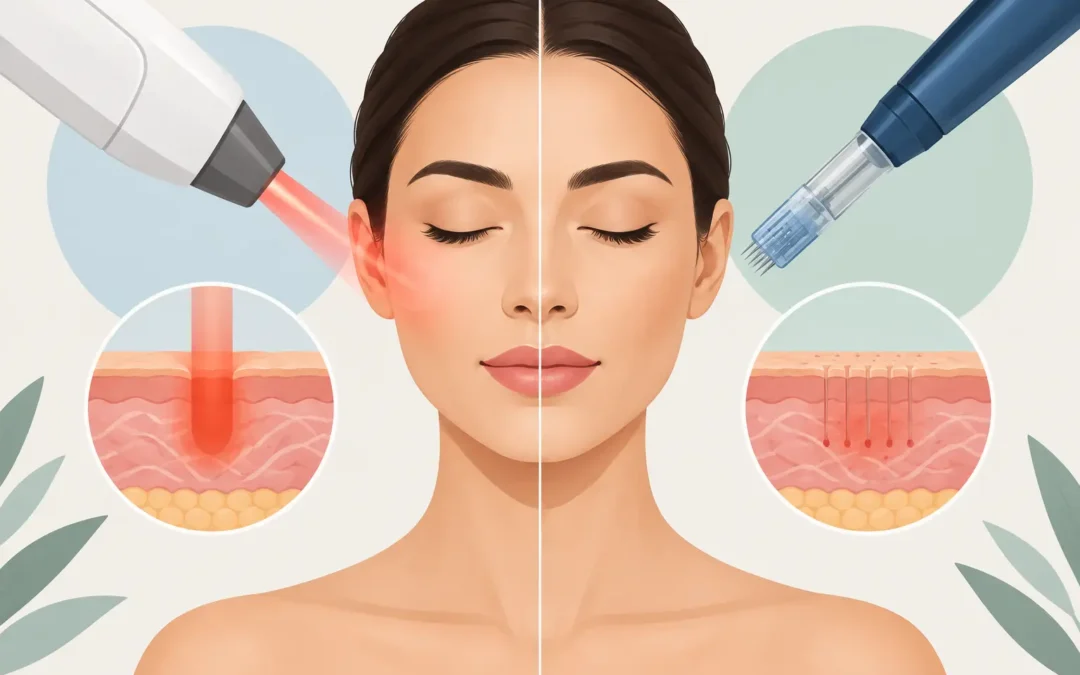
Laser resurfacing uses focused light energy to treat targeted layers of the skin. Depending on the laser technology and settings selected, treatment can help improve the appearance of uneven texture, fine lines, sun-related discolouration, enlarged-looking pores, and some acne scarring. The controlled energy prompts skin renewal and collagen production, which can create a clearer, smoother, more refreshed appearance over time.
Microneedling works by creating precise microchannels in the skin with very fine needles. This controlled process stimulates the skin’s natural repair response and encourages collagen and elastin production. It is commonly chosen to improve overall texture, the look of pores, early lines, and mild scarring while supporting a more even, healthy-looking glow.
Neither treatment is a shortcut to entirely new skin overnight. Collagen remodelling takes time, and the most polished results often develop gradually over several weeks or through a recommended series of sessions.
Laser Resurfacing Versus Microneedling: Results That Matter
The visible outcome you want should lead the conversation. If your priority is a more noticeable correction of sun damage, stubborn uneven tone, deeper textural changes, or lines that have become more pronounced, laser resurfacing may offer a higher level of correction. It can be customized from lighter rejuvenation to more intensive resurfacing, depending on the technology available, your skin assessment, and your tolerance for recovery.
Microneedling is often an excellent fit for clients who want consistent, subtle-to-moderate skin refinement. It can soften the appearance of mild acne scars, improve texture, and give skin a firmer, more even-looking quality. Because it relies on a mechanical collagen-stimulation process rather than heat-based laser energy, it may also be considered for a broader range of skin tones when performed with appropriate technique and settings.
When laser resurfacing may be the better fit
Laser treatment may be recommended when a client wants a more intensive approach to visible photodamage, uneven pigmentation, fine lines, or rough texture. It can also be appealing when someone prefers fewer treatments with the potential for more pronounced change per session.
That said, a stronger treatment is not automatically the best treatment. More intensive resurfacing can involve greater redness, peeling, sensitivity, and aftercare. For a client with a packed work calendar, an upcoming event, or a tendency toward post-inflammatory hyperpigmentation, that trade-off deserves careful consideration.
When microneedling may be the better fit
Microneedling can be a smart choice for skin that needs steady collagen support rather than aggressive resurfacing. It is often selected by first-time med spa clients, those focused on early signs of aging, or anyone looking for a treatment that can be integrated into a regular skin-maintenance plan.
The improvement is typically progressive, not instant. A series may be recommended, with appointments spaced to allow the skin to respond and rebuild. For many clients, that rhythm feels practical: they can pursue meaningful improvement without stepping away from work or social plans for an extended recovery period.
Downtime, Comfort, and Your Calendar
Recovery is one of the clearest differences between these treatments. After microneedling, it is common to experience temporary redness, warmth, tightness, or mild swelling. Many people describe the first day as similar to a moderate sunburn. Depending on treatment depth and individual sensitivity, the skin may look calmer within a day or two, although gentle aftercare remains essential.
Laser resurfacing can require more downtime, particularly with more intensive settings. Redness, swelling, flaking, dryness, or peeling can last several days and sometimes longer. Lighter laser treatments may have a shorter recovery window, while deeper resurfacing requires more planning and more diligent aftercare.
Comfort also varies. Topical numbing may be used for microneedling and certain laser treatments to make the experience more manageable. Your provider should explain what you are likely to feel during treatment, what your recovery may look like, and how to prepare for the days that follow. Clear expectations are part of premium care.
Skin Tone and Safety Deserve Individual Attention
Not every laser is appropriate for every skin tone or concern. Some laser technologies and settings can increase the risk of unwanted pigment changes, particularly in deeper skin tones or skin that is prone to hyperpigmentation. This does not mean laser treatments are off the table. It means the device, settings, timing, pre-treatment preparation, and provider expertise matter greatly.
Microneedling may be an appealing alternative for clients whose skin tone or pigmentation history calls for a more cautious approach to heat-based treatments. Even then, it should never be treated as a one-size-fits-all service. Active acne, open skin, certain medical conditions, recent tanning, some medications, and a history of abnormal scarring can all affect candidacy.
Sun protection is non-negotiable with either option. UV exposure before or after treatment can compromise healing and contribute to uneven pigmentation. A clinician may also recommend a tailored skincare routine to prepare the skin and protect your results.
How to Choose Between the Two
The best decision begins with an honest look at your priorities. Consider the concern you want to improve, how quickly you need to return to your normal routine, your previous treatment history, and how your skin reacts to irritation or pigment changes.
If you are preparing for a wedding, professional milestone, or holiday, timing matters as much as treatment selection. Planning skin treatments too close to an important date can create unnecessary pressure, especially if your skin needs longer than expected to settle. Starting early gives your provider room to adjust your plan and build results gradually.
Your goals may also call for a combination approach over time. For example, a client may use microneedling as part of ongoing collagen maintenance, then consider laser resurfacing when they want more targeted correction for texture or sun damage. The ideal plan should be measured, not excessive, and should evolve as your skin changes.
A Consultation Makes the Difference
Online before-and-after photos can be helpful for inspiration, but they cannot assess your skin barrier, current pigmentation, lifestyle, or tolerance for downtime. A proper consultation should include a close review of your concerns, medical and skincare history, sun exposure, and desired outcome. It should also make room for questions about expected results, treatment intervals, aftercare, and cost.
At Alpha Med Spa, The Alpha Difference is a consultation-led approach that pairs advanced aesthetic technology with attentive, individualized care. Rather than steering every client toward the same service, a trained professional can help determine whether laser resurfacing, microneedling, or another skin-rejuvenation option is the most appropriate path for your goals.
Your skin does not need the most intense treatment to look its absolute best. It needs the right level of care, delivered at the right time, with a plan that respects both your skin and your life.